Here is the seventh installment of HKS Hill Glazier Studio's blog "Top 10 Design Tips to Dazzle Your Guests." This month, the focus is on spa design, with thoughts from Ray Neal, Steve Doyle, and Luciano Mazza.
An outstanding spa experience can help set a hotel or resort apart from its competition. From a design perspective, the spa presents an architect with an opportunity to get creative. From an ownership point of view, it is an integral profit center. Great spa design must be beautifully pristine, yet highly functional—imagine spa employees floating like butterflies in rarified air, creating a guest experience deluged in relaxation and rejuvenation—the ultimate escape.
Privacy, Privacy, Privacy. Allow for complete privacy from every corner and every room. Make it an escape. Place the spa in a quiet or serene location, and make the most of any natural views or vistas the site has to offer.
Right Place, Right Time. Avoid locating the spa in proximity to other public areas such as the restaurant, meeting rooms or business functions; the journey to and from the spa should be an experience in and of itself. Comingling the spa with other public locations, noise and traffic quickly erases that “in the moment” sensation.
Treat Me Right. It’s a delicate balance between servicing the guest and discretely providing services. Place back-of-house and support spaces near or within the treatment zones, where the guest experience and service-related functions interact but are not seen.
Part and Parcel. Design the spa as an integral part of the resort or hotel—a chapter or a continuation of the same story, and not just a luxurious addition or world apart.
Soul Immersion. Climate permitting, incorporate outdoor paths that lead from the lockers and lounges to treatment rooms. It’s important for guests to feel mesmerized by the ambiance, local climate, and culture. Let them breathe in the salt air and the native flora, and feel the warm breezes.
Sensory Sensation. Create texture, bring the outdoors in, and delight guests with dramatic passages and arrivals to their treatment rooms. Use a color palette and materials to stimulate and enlighten the senses as the guests begin their retreat and escape.
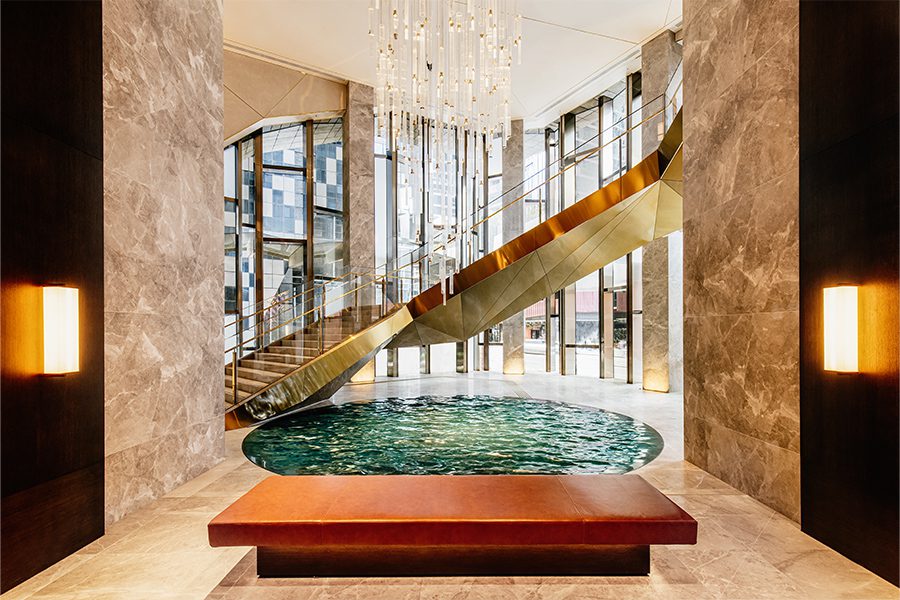
Mood Maker. Incorporate features to create an ambient and relaxing quality. Exceptionally appropriate lighting, tranquil water elements, and serene landscaping should work in harmony to create a place of sanctuary.
Public-Privacy Protection. Create a clear demarcation pattern for spa guests from locker rooms to treatment areas without crossing highly public spaces. The spa lounge, whether co-ed or gender specific, provides a welcome, anticipatory departure from the mainstream to the sublime, reinforcing the escape from the daily grind.
What’s the Hook? In urban settings or locations where the connection to the outdoors is not possible, an iconic, signature element—such as a themed co-ed pool—can serve as the draw and allure for the spa.
Did You Hear That? We hope not. Getting it acoustically correct is the single biggest technical challenge to tackle in spa design. While studying your wall, floor, and ceiling assemblies, don’t overlook HVAC systems, lights, and equipment noise. Water features, music, and “white noise” will assist in providing the quiet that the guest will remember.